SEO Ranking Checker First: Free Tools for Automated Blog Success
Most "SEO automation" fails for one boring reason, nobody checks if it's working.
If you're publishing blog posts (manual or automated) and your traffic still looks flat, you don't need more hype. You need an SEO ranking checker habit, plus a small set of free tools that tell you what to write, how Google sees your site, and whether your new posts are climbing or sinking.
This guide is built for the real situation most site owners are in, limited time, limited budget, and a backlog of "I'll do SEO later." I'm going to show you a practical free-tool stack, a simple workflow, and the decision points where people waste months.
The Real Problem: Automation Without Measurement
Automation sounds like the shortcut. Publish more, rank more, win more. But if you're not measuring rankings and search demand, automation can quietly scale the wrong things.
Here's what I see most often: people schedule content, feel productive for two weeks, then stop because "SEO didn't work." The truth is they never set a baseline, never watched a small set of target queries, and never connected posts to results.
The fix is not complicated. It's a loop:
- Pick topics people actually search.
- Publish content consistently.
- Check rankings and impressions (how often you show up).
- Update what's close to winning.
If you do that loop, automated blog publishing becomes an advantage instead of a content treadmill.
Free Tools That Make Automated Blogging Actually Work
You don't need a giant paid stack to get clarity. You need a few free tools that each answer one question: "What should I write?", "Can Google crawl it?", "Is it improving?", and "What do I fix first?"

Google Search Console (Free) for Real Search Data
Google Search Console is the closest thing to "truth" you'll get without paying. It shows:
- Queries you already appear for (even if you're buried on page 5)
- Pages getting impressions and clicks
- Indexing issues (pages not being picked up)
- Manual actions and security problems
Set it up first. If your site isn't verified in Search Console, you're basically running SEO with a blindfold.
Google's official product page is here: Google Search Console.
What to look at weekly:
- Performance report: filter by Queries, then sort by impressions to find topics you already have a foothold in.
- Average position: don't obsess daily, but watch trend lines.
- Pages report: find which URLs are rising, and which are stuck.
Google Analytics (Free) for Behavior Clues
Analytics won't tell you "rankings" directly, but it tells you if visitors from organic search (unpaid search traffic) are doing anything useful.
If a post gets clicks but nobody stays, that's a content problem, not a publishing-frequency problem.
Keep it simple:
- Track organic sessions to your blog posts
- Look at engagement (time on page, scroll, conversions if you have them)
- Compare new posts against older posts after 30 to 60 days
A Free SEO Ranking Checker: Use It Like a Dashboard, Not a Dopamine Button
A free SEO ranking checker is helpful, but only if you use it the right way.
Most people use ranking tools like a slot machine. They check random keywords, see random positions, and panic. That creates noise, not progress.
Use a ranking checker for a small, stable keyword set:
- 10 to 30 keywords that match your core services or products
- A mix of "money" terms (buy intent) and "support" terms (informational)
- A few keywords per important page
The goal is not perfect accuracy. The goal is direction.
A practical rule that saves time: if you publish daily, check rankings weekly. If you publish weekly, check rankings every two weeks. Daily checks make you overreact, because Google reorders results constantly.
Pagespeed Insights (Free) to Catch Slow Sites That Can't Hold Rankings
If your site is slow, you can publish all day and still struggle. Google explicitly uses page experience signals, and Core Web Vitals are part of that conversation.
Run your main pages through: Google PageSpeed Insights.
You don't need perfection. You need "not terrible." If your mobile performance is a disaster, fix that before you assume content is the problem.
Rich Results Test (Free) for Schema and Snippet Issues
If you use structured data (schema, the code that helps Google understand your page), validate it so you're not unknowingly breaking your visibility.
Use: Google Rich Results Test.
This matters for blog posts that could qualify for enhanced snippets. Even if you don't run schema yourself, plugins and themes sometimes add it, and sometimes they add it badly.
A Simple Decision Framework: DIY Free Tools vs Automated Publishing
Free tools are great for clarity, but they don't write, publish, or stay consistent for you. That's where most small businesses fall apart.
So here's a clean framework I use.
Choose DIY + Free Tools If You Have Time and Tight Focus
DIY works if you can realistically do these every week:
- Research keywords and pick topics
- Write or edit posts
- Add internal links, headings, and basic on-page SEO
- Publish consistently
- Check Search Console, then update what's close to ranking
This is a good path if your site is small, your niche is narrow, and you're fine moving slower.
If you want a structured method for picking topics, start with an SEO keyword research tools system that pairs with automation.
Choose Automated Blog Publishing If Consistency Is Your Bottleneck
Automation is the better path if your reality looks like this:
- You know content matters, but you don't ship it reliably.
- You have more than one site, offer, or location page.
- You want to build topical coverage (a library of related posts) without spending agency-level money.
This is exactly why I built SEO Sniper. It's set-and-forget publishing, but the point isn't "more posts." The point is consistent publishing paired with tracking, so you can see movement, not just output.
If you're comparing what automation really changes and what it doesn't, automated SEO blog post benefits and common caveats lays it out.
The Trade-Off Most People Miss: Automation Can Scale Mistakes
Automation multiplies whatever strategy you start with.
- If your topics are good, automation scales growth.
- If your topics are random, automation scales noise.
That's why an SEO ranking checker and Search Console are non-negotiable. They keep automation honest.
Worked Example: a "Free Tools + Automation" Weekly Loop That Builds Rankings
I'm going to walk through a realistic workflow you can copy. No fluff, no "post 10x a day" nonsense.
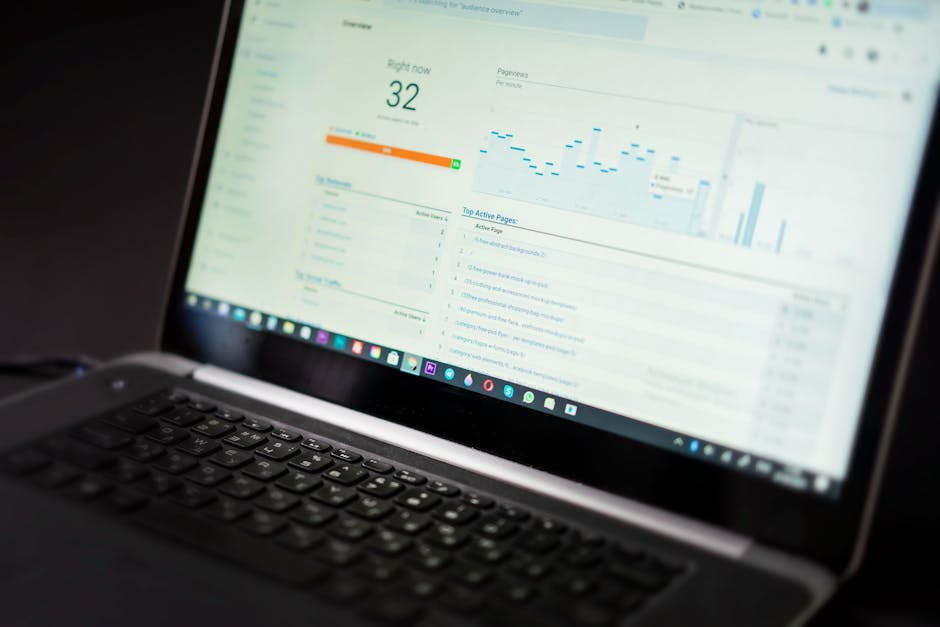
Scenario
You run a service business site and you're publishing automated blog posts. You want to know if the posts are earning visibility, and you want to decide what to write next without paying for an expensive suite.
Step 1: Pick a Small Tracking Set (Once)
Open your SEO ranking checker and create a list of 20 keywords:
- 5 core service keywords (high intent)
- 10 supporting informational keywords (how-to, best-of, comparisons)
- 5 brand or local modifiers if relevant
Map each keyword to the page you want to rank. If you don't do this, you'll accidentally make pages compete with each other.
Step 2: Use Search Console to Find "Almost Winners" (Weekly)
In Search Console:
- Go to Performance
- Filter to the last 28 days
- Sort queries by impressions
- Look for average positions roughly 8 to 25
Those are your "almost winners." They're already being tested by Google. You don't need to guess.
Now connect the dots:
- If a query is showing impressions but low clicks, your title and snippet might be weak.
- If the page is ranking 12 to 20, a better internal link and a clearer section might push it.
- If the page is ranking 40+, it may need a different angle, or the site needs more authority in that topic.
Step 3: Assign the Next Content Batch Based on Coverage, Not Vibes
This is where people mess up. They write "whatever sounds good."
Instead, build clusters (groups of related posts) that support one main page.
Example structure:
- Main page: "Service A"
- Support posts:
Automated posting makes this easy, because you can publish consistently across that cluster.
Step 4: Tighten Internal Linking (Monthly)
Internal links are free leverage. They tell Google which pages matter and how topics connect.
Once a month, do this:
- Find your strongest blog posts in Search Console (most clicks)
- Add 1 to 3 internal links to your key service page
- From your key service page, link back to the best supporting posts
Keep anchor text natural, like "pricing options," "common mistakes," or "how the process works."
Step 5: Check Results Without Overreacting (Weekly)
Now you use the SEO ranking checker the right way.
- Compare week-over-week movement for your 20 tracked terms
- Flag keywords that jumped or dropped significantly
- Cross-check in Search Console (rank checkers can be noisy)
If rankings trend up while impressions rise, keep publishing. If impressions rise but rankings don't, improve the content structure and internal linking. If nothing rises after a real stretch (think 60 to 90 days), your topic targeting is probably off, or your site has technical barriers.
This loop is simple, but it's how you turn "automated blog success" into something real.
Common Mistakes That Make Free Tools Feel "Useless"
Free tools are powerful, but only if you interpret them correctly. These are the issues that waste the most time.
Mistake 1: Tracking Too Many Keywords
If you track 500 keywords, you won't act on any of them. You'll just watch charts.
Start with 20. Earn the right to track more.
Mistake 2: Confusing Indexing with Ranking
A page can be indexed (known to Google) and still rank nowhere.
Search Console helps you separate these:
- Indexing issues mean Google can't properly store or crawl your page.
- Ranking issues mean your content is not competitive yet.
Solving the wrong problem is how people burn months.
Mistake 3: Publishing Without a Clear "Target Page"
Every post should support something. A service page. A category page. A product page.
If your blog is just a pile of unrelated posts, it's hard for Google to understand what your site is about. Automation can accelerate that mess unless you define clusters.
Mistake 4: Expecting Immediate Results From New Posts
New content often needs time to be crawled, assessed, and compared against existing results. That's normal.
What I look for first is not "page one." I look for early signals:
- Impressions start showing up in Search Console
- Average position improves over weeks
- The page begins ranking for long-tail queries (more specific searches)
Those signals tell you the content is being tested.
Mistake 5: Treating Titles Like Decoration
A boring title kills clicks, even if you rank.
If Search Console shows a query with lots of impressions and low clicks, rewrite the title to match intent more clearly. Keep it honest. Keep it specific.
How I'd Set This up with SEO Sniper (so You Don't Stall Out)
The free tools tell you what's happening. The problem is execution. Most businesses don't fail at SEO because they lack information. They fail because they stop publishing and stop iterating.

SEO Sniper is built for the "I need consistency" problem.
- Basic is $59 and supports 1 website (URL) with up to 1 automated SEO post per day.
- Standard is $149 and supports 3 websites (URLs) with 3 automated SEO posts per day.
- Pro supports larger portfolios with 10 websites (URLs) and 10 automated SEO posts per day.
What makes this work better than random content tools is the loop. You publish consistently, then you use an SEO ranking checker mindset (plus Search Console) to decide what to double down on.
If you want to see how an automated service fits into a real "problem then solution" approach, an automated blog post SEO service playbook for scaling content is the cleanest breakdown.
If you're the type who wants numbers and limits up front, pricing is spelled out here: automated SEO blog post pricing plans for different site counts.
The goal is not to flood your site. The goal is to publish enough quality content, often enough, that your site becomes the obvious answer in your niche.
FAQ
What's the Best Free Tool to Replace a Paid SEO Suite?
Google Search Console is the best free tool for SEO decisions because it comes from Google and shows real queries, impressions, and clicks. Pair it with a simple SEO ranking checker for a small set of priority terms.
How Often Should I Check Rankings If I'm Publishing Automated Blog Posts Daily?
Weekly is the sweet spot. Daily checks create noise and push you into bad decisions. Weekly trends are enough to see if your content strategy is working.
Why Do Rank Checkers Disagree with What I See in Google?
Search results change by location, device, and personalization, and Google also runs constant tests. Treat an SEO ranking checker as directional, then validate in Search Console.
How Long Until Automated Blogging Shows Results?
It depends on your site, your competition, and your topic choices. The earliest healthy sign is impressions showing up in Search Console, then gradual position improvements. If you're not seeing impressions, you may be targeting the wrong topics or your pages may not be getting indexed well.
If you want automated publishing without losing control, start by setting up Search Console, pick 20 keywords to track, and commit to the weekly loop. That's the difference between "posting a lot" and building rankings on purpose.
If you're ready for the set-and-forget part, SEO Sniper is built to publish consistently at a price most agencies can't touch, and our dashboard keeps you focused on what's actually moving.