Free Web Analytics Service: Unlock SEO Success with Automated Blog Services
You publish a blog post, wait a week, then check your traffic and see... nothing. No rankings you can find. No leads. Just a vague feeling you're "doing SEO" without proof.
That's the exact moment a free web analytics service becomes useful, not as a vanity dashboard, but as a decision tool. If you can see what pages get found, what search terms show up, and what content actually turns into calls or purchases, you stop guessing. Then automated blog publishing becomes a force multiplier because you're not just posting more, you're posting what data says will win.
I run SEO Sniper, and my whole angle is simple: publish SEO-optimized posts automatically (set-and-forget), then use analytics and ranking visibility to keep the content pointed in the right direction. Below is how to think about "free analytics" in real life, what it can and can't tell you, and how to pair it with automated blog services so you get compounding results instead of random content.
What a Free Web Analytics Service Can and Can't Do for SEO
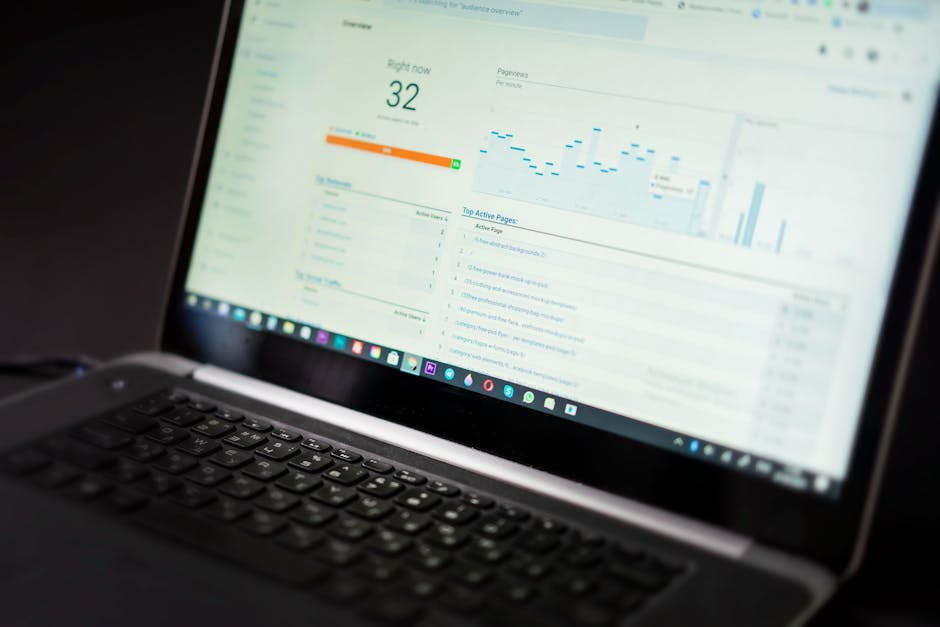
A free web analytics service is great at answering one core question: "What happened on my site after I did X?" It tells you about traffic, pages visited, and sometimes where visitors came from.
What it usually doesn't do by itself is tell you "what to publish next" in a clean, business-friendly way. That's where most people get stuck. They either stare at graphs that don't tie to revenue, or they obsess over the wrong metrics (like total sessions) while their leads stay flat.
Here's the practical breakdown of what "free analytics" typically covers, and what you still need to connect the dots.
What You Can Measure Reliably
Most free analytics setups can help you track these without much drama:
- Which pages get visits (and which pages don't)
- Which channels drive traffic (search, social, referral, direct)
- What people do on the site (time on page, page paths, basic events)
- Which pages drive conversions (if you set up conversion events)
That last bullet is the big one. SEO isn't "traffic." SEO is targeted traffic that turns into something you can bank.
If you're using Google Analytics, you'll be working inside Google Analytics 4 (GA4). Google's own documentation explains how GA4 measures users and events, which matters because the numbers won't match older versions of Analytics: Google Analytics 4 documentation.
What Free Analytics Often Misses
This is where business owners get surprised.
A free web analytics service might not clearly show:
- The exact keywords you rank for (or you'll get partial data)
- Whether your traffic is "good traffic" (buyers) or just curiosity clicks
- How rankings are trending week to week, across many posts
- Which topics are "near winners" (positions 8 to 20) that need a second push
Google Search Console is free and helps with the search side. It shows queries, impressions, clicks, and average position: Google Search Console Performance report.
But even with Search Console, you still have to do the hard part, choosing topics, publishing consistently, and improving what's already working.
That's the reason automation matters. Data is only valuable if you can act on it without turning your calendar into a content factory.
The "Analytics First" Trap and the Fix That Actually Works
A lot of people search for a free web analytics service because they want certainty before they invest. I get it. Nobody wants to pay for content that doesn't move the needle.

The trap is thinking analytics will give you certainty without volume.
If you publish one post a month, your analytics will stay quiet for a long time. You won't collect enough signals to learn what Google likes, what your market clicks, and what converts. SEO is pattern recognition over many pages, not a one-shot bet.
The fix is a simple loop:
- Publish consistently (enough volume to create signals).
- Measure outcomes (rankings, impressions, clicks, conversions).
- Double down on topics and formats that show traction.
Automated blog services exist to make Step 1 boring and reliable.
At SEO Sniper, I built plans around "daily publishing" because consistency is what most businesses can't hold for long. Our basic plan supports 1 website (URL) with up to 1 automated SEO post per day. Standard supports 3 websites with 3 posts per day. Pro supports 10 websites with 10 posts per day.
That frequency is not about flooding the internet. It's about creating enough surface area that your analytics starts telling you the truth faster.
The Metrics I'd Watch First (Not the Ones People Brag About)
If you want analytics that helps you make decisions, focus on a small set of numbers that connect to growth:
- Search impressions (Search Console): proof Google is showing you at all
- Search clicks (Search Console): proof your titles and topics are attractive
- Landing pages that get organic traffic (Analytics): proof content is discoverable
- Conversions from organic landings (Analytics events): proof traffic is valuable
- Pages sitting just outside page 1: proof you're close, and should push
Notice what's not on the list: "total followers," "pageviews," and "bounce rate panic." Those can be useful later, but early on they distract you.
If you want a deeper read on how automated publishing fits into a real SEO workflow, this pairs well with how to use automated blog posts for SEO without guessing.
Worked Example: Turning Free Analytics Into a Content Plan That Wins
Most blog advice stops at "track your traffic." That's weak. Here's a worked example of how I'd actually use a free web analytics service plus search data to decide what to write next.
Let's say you run a local home service business, or an e-commerce brand, or a B2B agency. The exact industry changes, but the logic stays the same.
Week 1 to 2: Publish Enough to Create Signal
You start posting consistently. Not perfection, just consistent coverage of the problems your buyers search for.
After 10 to 20 posts, you check Google Search Console and see something like this pattern:
- Post A has high impressions but low clicks.
- Post B has decent clicks but the traffic doesn't convert.
- Post C has low impressions but a high conversion rate.
That mix is common. Each one tells you a different move.
Decision Moves Based on What You See
If a page has high impressions and low clicks:
Your topic is getting shown, but your snippet isn't earning the click.
Do this next:
- Rewrite the title to match the search intent (what the person wants to do).
- Tighten the opening paragraph so it answers the question fast.
- Add a clearer "what you'll learn" line near the top.
If a page has clicks but no conversions:
You might be ranking for the wrong intent. You're attracting researchers, not buyers.
Do this next:
- Add a "choose this if" section that nudges buyers to the right service.
- Put one clear call-to-action that matches the page topic.
- Link to the next step page (contact, booking, product category).
If a page has low impressions but high conversion rate:
This is gold. It means when the right people arrive, they take action. You need more of these pages and you need to help this one rank.
Do this next:
- Publish supporting posts that answer nearby questions.
- Internally link those posts back to the converting page.
- Expand the page with practical details people search for (pricing factors, timelines, comparisons).
The Non-Obvious Part: Your Best SEO Pages Might Look "Small" in Analytics
Here's a trade-off most people miss.
Your most profitable SEO page might only get 30 visits a month, but convert at 10 percent. Meanwhile, your "viral" page gets 2,000 visits and converts at 0 percent.
Analytics will tempt you to chase the 2,000. A business owner should chase the page that makes money.
That's why I like pairing automated blog publishing with a dashboard mindset. You publish broadly enough to find your winners, then you build around what converts.
If you're trying to decide how much publishing volume makes sense for your situation, how to choose automated blog post pricing plans with data is the cleanest comparison.
Choosing Automated Blog Services: a Simple Decision Framework
Automated blog services aren't a magic button. They're a leverage tool. They work best when you match the level of automation to your capacity and your goals.
Here's my blunt framework. Choose the option that matches your real life, not your fantasy schedule.
Option a: DIY Content + Free Analytics (Choose This If...)
This works if you have time, discipline, and you enjoy writing.
Choose this path if:
- You can publish at least 2 to 4 solid posts per month for 6+ months
- You're willing to learn basic keyword and topic selection
- You will actually check analytics and adjust topics
The risk is consistency. Most businesses don't fail because they're bad at SEO. They fail because they stop.
Option B: Automated Blog Publishing + Your Own Free Analytics (Choose This If...)
This is the "I need output without burnout" path.
Choose this path if:
- You want daily or near-daily publishing without hiring writers
- You want to build topical coverage fast (so Google can understand your site)
- You're comfortable making decisions from simple performance signals
This is where our service lives. You keep ownership of your site and your direction, and we help you keep the content engine running.
Option C: Automated Blog Publishing + SEO Dashboard Visibility (Choose This If...)
This is for owners who want less spreadsheet work.
Choose this path if:
- You manage multiple sites, locations, or brands
- You want clarity on what you rank for and what's moving
- You want to spot winners fast and scale them
At SEO Sniper, we pair automation with a robust SEO dashboard so you can see where you rank and what performs best. That matters because "publishing" is only half the job. Knowing what's working is how you stop wasting months.
A Practical Caveat: Automation Still Needs Guardrails
Even with automation, you should set guardrails so you don't build a blog that looks busy but sells nothing.
I'd set these guardrails from day one:
- Every post maps to a product, service, or buyer problem you can actually solve
- Every post has a clear next step (call, quote, email capture, product category)
- You review performance monthly and prune or improve weak pages
Google has been clear that it cares about helpful content, not how it was produced. If you want the source straight from Google, read their guidance on AI-generated content and quality: Google Search guidance on AI-generated content.
That's why I'm aggressive about usefulness. Automated doesn't mean mindless.
Common Mistakes That Make Free Analytics Useless (and How to Avoid Them)
If you've tried analytics before and it didn't help, it usually wasn't the tool. It was the setup, the interpretation, or the lack of follow-through.
Here are the mistakes I see the most, plus the fix.
Mistake 1: Tracking Traffic Without Tracking Leads
If your analytics doesn't track the actions that pay you, you'll optimize for the wrong thing.
Fix it by defining 1 to 3 conversion events that matter, like:
- Contact form submissions
- Quote requests
- Phone clicks (mobile)
- Purchases or add-to-cart events
- Booking confirmations
Keep it tight. Too many events turns your reports into noise.
Mistake 2: Not Separating Branded vs Non-Branded Search
Branded search is when people search your business name. Non-branded is when they search the problem you solve.
Branded search is great, but it's not proof your SEO content strategy is working. Non-branded visibility is what brings new people.
Fix it by checking Search Console queries and filtering for brand terms versus topic terms.
Mistake 3: Publishing Content That Has No "Job"
A lot of blogs are content museums. Interesting posts, no direction.
Fix it by assigning every post a job:
- Attract top-of-funnel traffic (education)
- Capture buyer intent (comparison, pricing, best-of)
- Support conversion (FAQs, objections, trust)
Automation is powerful here because you can build all three layers instead of only writing what you feel like that week.
Mistake 4: Expecting SEO to Move in Days
SEO is not paid ads. It's slower, and it stacks.
The better expectation is this: your early content builds a footprint, your later content builds authority, and the combination creates momentum. Analytics helps you see that momentum early (impressions and positions) even before traffic spikes.
Mistake 5: Never Updating Posts That Are "Almost There"
The easiest SEO wins often come from pages that rank near the bottom of page 1 or top of page 2.
Fix it by making a monthly habit:
- Identify posts with strong impressions and average position near page 1
- Improve the title and opening for click-through
- Add missing sections people expect (pricing factors, steps, comparisons)
- Strengthen internal links from newer posts
If you do that while publishing consistently, you get a one-two punch: new surface area plus stronger winners.
FAQ Free Analytics and Automated Blog Publishing
Is a Free Web Analytics Service Enough to Run SEO
It's enough to see behavior on your site and basic channel performance. For SEO decisions, pair it with Google Search Console so you can see search queries, impressions, and clicks.
What Should I Set up First, Analytics or Automated Blog Posts?
Set up analytics and Search Console first so your early posts start collecting clean data. Then publish consistently so you get enough signal to make good decisions.How Do I Know If Automated Blog Services Are "Working"?
Don't judge it by feelings. Watch search impressions trending up, more pages earning impressions, more non-branded queries appearing, and conversions coming from organic landing pages.Will Google Penalize Automated Content?
Google's stance is that it evaluates content by quality and helpfulness, not by whether it was created by automation. You still need content that answers real questions and matches search intent. Google's guidance is here: Google Search guidance on AI-generated content.My Take: Analytics Is the Steering Wheel, Automation Is the Engine
If you're serious about SEO, don't pick between automation and measurement. Use both.
A free web analytics service helps you stop flying blind, but it won't create results without enough content output to generate patterns. Automated blog services solve the consistency problem, and once consistency is handled, analytics finally becomes actionable.
If you want to stop guessing and start publishing at a pace most competitors won't maintain, that's exactly what I built SEO Sniper for. Pick the plan that matches your number of sites and how fast you want to scale, then use the dashboard signals to keep the content pointed at rankings and revenue.